
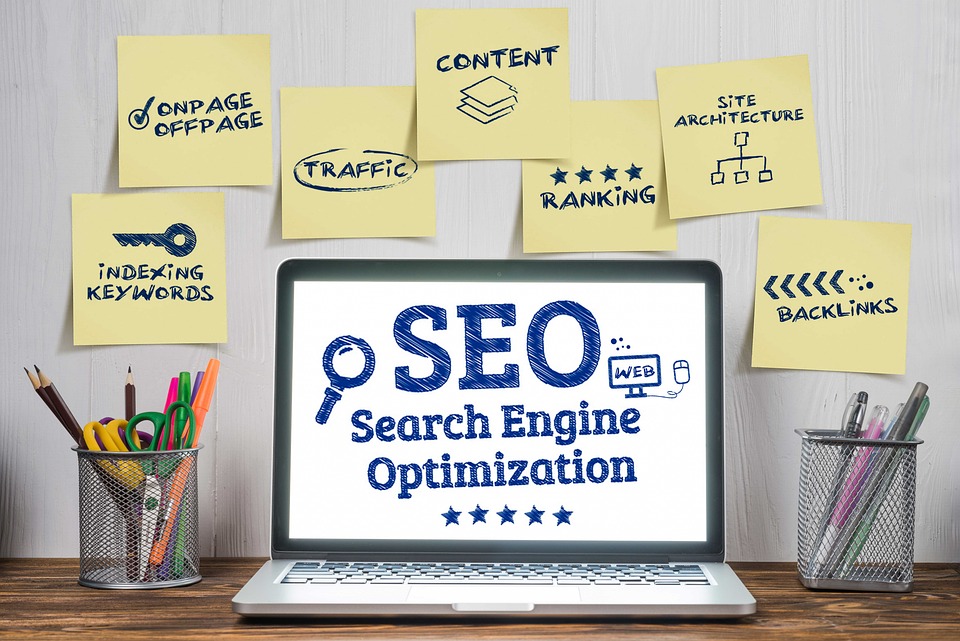

Now that you know how to search in the targeted market, On-Page SEO is the practice of crafting web pages that answer the searcher's questions. it's time to dive in. On-page SEO is versatile and extends beyond the content to other things like outline and meta tags, which we'll discuss in more detail in the next section on technical optimization. For now, it's time to put on your vocabulary hats - create your content!
Creating Your Content
Performing keyword research
In the last section, we learned how to discover how your target audience is searching for your content. Now is the time to put this research into practice. Here's a simple outline to follow to implement your keyword research:
- Review your keywords and group those with similar topics and purpose. Instead of creating separate pages for each different keyword, these groups will be your pages.
- If you haven't done so before, put each keyword or keyword phrases in the SERPs to determine what type and format your content should be. Evaluate with i. Sorting features of some pages that need attention:
2.1. Imageℑ mu &; Or is the video heavy?
2.2. Is the content long or short and sweet?
2.3. Is the content formatted in lists, bullet points or paragraphs?
- Ask yourself the question: “What unique value can I offer to make my page better than the pages currently ranked for my keyword?”
On-Page SEO lets you turn your research into content your audience will love. Just make sure you avoid falling into the trap of low-value tactics that can do more harm than good.
Low Value Tactics to Avoid
Your web content should be available to answer searchers' questions, direct them to your site, and help them understand your site's purpose. Content should not be created for the sole purpose of ranking high in search. Sorting is purposeful; It is a tool for, purpose. and helping searchers. If we put the car on the front of the horse, we run the risk of falling into the trap of low-value content tactics.
Some of these tactics Chapter 2' We've also reviewed, but let's take a deeper dive into some low-value tactics you should avoid when creating search engine-optimized content.
Weak Content
While it was customary for a website to have unique pages on different topics, an older content strategy was to create a page for each iteration of your ordered unordered keywords on page 1 for these highly specific questions. .
For example, if you were selling wedding gowns, you might have created separate pages for bridal gowns, wedding gowns, bridal gowns, and wedding gowns even though each page actually says the same thing. . A similar tactic for local businesses was to create different page content for each city or region customers wanted. These "geographic pages" often have the same or very similar content, and the settlement name was a unique factor.
Tactics like these were obviously not helpful to users, so why did the editors do it? Google wasn't always as good at understanding the relationship between words and phrases (or meanings) as they are today. "So, “bridal gowns” You want to be on the 1st ranking page for "bridal gowns" only. You have a page that may not have been opened on it.
This app is a web application that Google has dealt with specifically with the 2011 update known as Panda also created tons of poor, low-quality content. This algorithm update penalized low-quality pages, which is SERP’ It was concluded with higher quality pages that are at the top of the list. Google continues the process of demoting low-quality content and encouraging iteration of high-quality content.
Google searches for multiple, weaker pages instead of one for each variation of a keyword.It's clear that you should have a comprehensive page about it.
Copied content
It looks like such as "copied content", It refers to content that is shared between domains or across multiple pages of a single domain. "Lost" Content goes a step further and involves blatant and unauthorized use of content from other sites. This may include taking the content as-is and republishing it, or slightly modifying any original content without adding any value before republishing it.
There are many legitimate reasons for duplicate content, whether internal or cross-domain, which is why Google is using the original version of web content. encourages the use of a real canonical tag for emphasis. While you don't need to know this tag yet, the most important thing to note for now is that your content must be unique in terms of words and value.
Concealment System
A basic principle of search engine guidelines is that it shows engine crawlers the same content as you would show a human visitor. This means that you should never hide text in your website's HTML code that a normal visitor cannot see.
When this directive is violated, search engines call it "hide". names and takes action to prevent these pages from ranking in search results. Concealment can be performed in various ways and for various reasons, both positively and negatively. Below is Spotify's An appropriate example has been given to the example where Google displays different content to users than Google.
In some cases, Google may allow access to technically hidden apps because they contribute to a positive user experience. For more information on hidden content and how Google handles it, Google CSS + Javascript ‘ in "Hidden" how to render text? See the titles.
Keyword Stuffing
If you öyou need to add {critical keyword} to this page X times before" That said, you can see that it creates confusion about keyword usage. Many people think that adding a keyword to the page's content only X times will automatically rank for it. The truth is that while Google tries to mention keywords and related concepts on your site's pages, it's not specific to the page itself. It needs to add value beyond the use of keywords. If a page is going to be valuable to users, naturally combine keywords and phrases in a way that readers can understand so it doesn't look like it was written by a robot.
Here's another example of a keyword-filled content page using an old method: bolding all your targeted keywords.
Auto Generated Content
Perhaps one of the most disturbing types of low-quality content is the type that is automatically generated or programmatically created to manipulate search rankings and not help users. You can admit how little meaning it makes when you read some of the automatically generated content - they're technically words but put together by a program rather than a human.
It should be noted that advances in machine learning contribute to advanced and automatically generated content that will only get better over time. In Google's quality guidelines for auto-generated content, Google specifically mentions the branding of auto-generated content that tries to manipulate search rankings rather than all auto-generated content. That's why.
What to do instead: 10 times!
The "recipe secret formula" to sort in search results there is none. Google places the rankings of the pages high for the pages that it determines are the best answers to the searcher's questions.
In today's search engine, it's not enough that your page is not copied, spammed, or broken.
Your page should offer convenience to searchers and should be more convenient than any other page Google currently offers in response to a particular query.should be fine. Here is a simple formula for content creation:
- Search for the keywords you want to rank your page
- Determine which pages rank highly for these keywords
- Determine what attributes these pages should have
- Create better-healed content than this
We like to call it 10 times ingredients. If you create a page that is 10 times better (for that keyword) than the pages that show up in search results on a keyword, Google will reward you for it, and better still, naturally people will follow you. You will make it connect! Creating 10x content is hard work, but it turns into a natural flow profit.
Remember that there is no magic number when it comes to words on a page. What you should aim for is what satisfies the user's intent sufficiently. Some questions can be answered comprehensively and accurately with 300 words, while others may require 1,000 words!
NAP: A Note for Local Businesses
If you're a business that engages with your customers face-to-face, make sure you include your business name, address, and phone number (NAP) prominently, accurately, and consistently in your site's content. This information is usually in any footer or header of a local business website, as well as in the "contact us" link. can be viewed on the page. You may also want to flag this information using the local business plan. Plan and structured data, "Other optimizations" for this section You can discuss it in more detail in the section.
If you're a multi-location business, it's best to create unique, optimized pages for each location. ÖFor example, istanbul, Tacoma and Bellevue' A business with locations in both should consider having a page for each:
example.com/
istanbulexample.com/
tacomaexample.com/
bellevueexample.com/
Each page should be uniquely optimized for that location so that the istanbul page will have unique content about the istanbul location, listing istanbul NAP and even listing testimonials from istanbul customers. . If there are dozens, hundreds or even thousands of locations, use a store locator tool to help you measure. çbar available.
Local vs National vs International
Not all businesses operate only at the local level and that "Local SEO" Remember that it doesn't do what we're talking about.” Some businesses want to attract customers at the national level (all of the United States) and others want to attract customers from more than one country (“International SEO”). Let's take Seoart for example. While our product (SEO software) is not tied to a specific location, a coffee shop may require customers to travel and buy it to meet their caffeine needs.
In this scenario, the coffee shop should optimize their website for their physical location, while Seoart should use "Istanbul"; Specific to location such as "SEO software" without a modifier; target can also hold.
How you should optimize your site largely depends on your target audience, so be sure to consider them when creating your website content.
We hope you still have some energy after completing the difficult but rewarding task of creating a page that is 10 times better than your competitors' pages, because A few things to consider before your page is complete. there is something more! In the next sections, besides naming and organizing your content, you will be able to meet the needs of your pages. we'll talk about other on-page optimizations.
Beyond Content: What Your Pages Needs; Other Optimizations Heard
Can I increase the font size to create paragraph headings?
How can I control which title and description appear for my page in search results?
This chapter; after reading it, search engines have just createdYou will understand other important page elements that help him understand 10 times the content, so let's get started!
Title Tags
Title tags are an HTML element used to indicate titles on your page. The main title tag, called H1, is usually reserved for the title of the page. Looks like
Page Title
There are also subheadings that go from H2 to H6 tags, but not all of them; It is not necessary to use it on a page. The hierarchy of title tags goes from H1 to H6 in descending order of humidity.
Each page must have a unique H1 that identifies the main topic of the page, this is usually automatically generated in the title of a page. As the main descriptive title of the page, H1 should contain that page's primary keyword or phrase. You should avoid using title tags to mark non-title items such as navigation points and phone numbers. Use title tags that tell you what the following content should refer to.
Take this page about visiting Copenhagen for example:
Copenhagen Travel Guide
Copenhagen by the Seasons
Visiting in Winter
Visiting in Spring
The main topic of the page is main
It is introduced in the
heading, and each additional heading is used to introduce a new subtopic. In this example,
,
It is more specific than
and
tags
It is more specific than
. This is just an example of a structure you can use.
While what you choose to put in your title tags can be used by search engines to evaluate and rank your page, it's important to avoid exaggerating their importance. Title tags are one of the many on-page SEO factors, and quality backlinks and content usually don't move the needle. Therefore, when creating your titles, focus on your site visits.
Internal Links
In Chapter 2, we discussed the importance of having a crawlable website. Part of a website's crawlability lies in its internal link structure. It allows search engine crawlers to find all pages of your site when you link to other pages on your website. This transfers link equity (ranking power) to other pages on your site and helps visitors navigate your site.
Öfor example, the new updated SEO Startup; If we wanted to highlight the öguide's importance, we would have included a link like this! (and it's a really good guide).
The importance of internal connections is well established, but here's how this looks in practice; There may be confusion about
Connection Accessibility
Links that require clicks (such as a navigation drop-down menu to display) are often hidden from search engine crawlers; therefore, the content on your website; if pages are only linked via such links, you may have problems indexing those pages. Instead, opt for links that can be accessed directly on the page.
Link Text
Link text is the text you link to pages with. Below is the HTML of a mesh without anchor text and a mesh with anchor text. You can also see an example of how it will look.
In my live view, it looked like this:
Anchor text signals search engines about the content of the target page. For example, "SEO" yu ölearn" If I link to a page on my site using anchor text, that's a good indication for search engines that the page targeted is one where people can learn about SEO. Be careful not to overdo it though. When you try to change the ranking of a page, search engines fill in the same keyword. too many content using anchor text link may appear. It's best to make anchor text natural rather than formulaic.
Number of Connections
Google's General Web Manager Guidelinesi' In "Limit the number of links on a page to a reasonable number (a few thousand at most)" they say. These quality guidelines are part of Google's technical guidelines rather than part, so it's very drinkable. Having a link by itself isn't something that will penalize you, but it does affect how Google finds and evaluates your pages.
The more links there are on a page, the less equity each link has and can surpass its target page. There are too many eigenvalues to just navigate a page.
So it's safe to say that you should only connect when you're serious! You can learn more about link equality in our SEO Learning Center.
In addition to delegating authority between pages, this link is also a way to help users navigate to other pages on your site. This is a situation where doing what's best for search engines also does what's best for searchers. Creating too many links not only undermines the authority of each link, but also makes it useless and overwhelming. Think about how the searcher might feel when they link to a page that looks like this:
Welcome to our gardening website! Horticulture, we have many articles about horticulture and herbs, fruits, vegetables, longevity; and we have helpful tips on annual plants. Learn more about gardening on our gardening blog.
Wow! Not only is this too much link building to handle, it also reads quite unnaturally and doesn't contain much content (which could be considered "poor content" by Google). Focus on quality and help your users navigate your site; You probably won't have to worry about too many connections.
Redirection
Removing and renaming pages is common, but in case you move a link to a page, be sure to update the links to that old URL! At the very least, you should make sure to re-direct the URL to its new location, if possible, for everything in the source so that users and browsers don't have to go through redirects to reach the target page. update links to this URL. If you choose to redirect only, be careful to avoid very long redirect rankings (Google avoids ranking "redirects... keep the number of redirects in the ranking low, ideally" maximum 3 and minimum 5.")
Example of routing order:
(original location of content) example.com/location1 →
example.com/location2 →
(current location of content) example.com/location3
Better:
example.com/location1 → example.com/location3
Image; Optimization
Images are the biggest culprit of slow web pages! The best way to solve this is to compress your images. Image "save for web", although there is no one-size-fits-all solution when it comes to compression image Testing various options such as sizing and using compression tools like Optimizilla for Mac or ImageOptim (or Windows alternatives) are also ways to evaluate what works best.
Another way to optimize images (and increase your page speed) is to get the right image; choose the format.
Which image; choosing the format to use:
- Image&image&; if it requires animation, use a GIF.
- High viewℑ resolution resolution use JPEG (and test different compression settings) if you don't need to protect it.
- High viewℑ resolution resolution use PNG if you need to protect it.
o If there are too many colors in the image PNG-24'&; use.
o If the image doesn't have too many colors, use PNG-8.
Learn more about choosing image formats from Google's image optimization guide .p>
Create a colored box to help visitors feel like things are loading faster, or use very blurry images for low resolution during rendering Loyalty version, this is a different way to keep the visitor on the semi-slow loading page.
Alternate Text
Alternative text (alternative text) within images is a principle of web accessibility and is used to describe images to the visually impaired through screen readers. It is of great importance that the page has alternative text descriptions so that anyone with visual impairments can understand what the images on your website represent.
Search engine bots also scan alternative text to better understand images, which gives search engines a better display of images. It provides an additional advantage to obtain the resource.
Wrong:

True:
website accessibility guidelines and Google's web accessibility basics.
- Headings - You can help readers navigate the page by dividing your content with useful headlines. In this way, it makes it easier for a reader to get information from only a certain section, especially on long pages.
- Bullets - Great for lists, bullet points are what readers need. It helps them to review the information they hear and find them faster.
- Paragraph breaks - Avoiding walls of text can help prevent page abandonment and encourage site visitors to read more text on the page.
- Supporting media- Images, videos and tools to supplement the content, as appropriate; çadd the bars.
- Bold and italic for emphasis - Bolding or italicizing words can create emphasis, so highlighting should be the exception, not the rule. This formatting Appropriate use of options can bring out the important points you want to convey.
Formatting is the "0" that appears in the prominent parts of your page, that is, on other natural results. location" It can also affect the ability to appear in the results.
There is no special password that you can add to your page to appear here before you can say for this situation, but taking note of the question purpose can help you better structure the highlights of your content . "For example,"cake vs. cake" If you're trying to sort for, it might make sense to include a table in your content with the benefits of the cake in one column and the benefits of the cake in the other column. Or "Portland" best restaurants to try" If you're trying to rank for your content, you can indicate that Google is asking for a list, so formatting your content with bullet points can help.
Title Tags
The title tag of a page is a descriptive HTML öitem. They are placed inside the head tag of each page and look like this:
Each page on your website should have a unique, descriptive title tag. The information you enter in your title tag field will appear here in search results, but in some cases Google can adjust how your title tag appears in search results.
Can also appear in web browsers…
Your title tag plays a big role in people's first impression of your website and gets searchers in the SERP. It is a highly effective tool to add to your page on top of other results in. When your title tag combined with higher rankings in search results, you'll attract more visitors to your website. This is SEO's It underlines that this is not just about search engines, but about the entire user experience.
What is Making an Effective Title Tag?
Keyword usage: Having your target keyword in the title helps both users and search engines understand what your page is about. Also, the closer the keywords are to the front of the title tag, the more likely a user is to read (and hopefully click) them, and the more helpful they are for ranking.
Length: On average, search engines can display the first 50-60 characters (~512 pixels) of a title tag in search results. Your title tag SERP's exceeds the number of characters allowed, a triplet where the title is truncated. dot "..." it appears. While it's safe to stick to 50-60 characters, never compromise on quality for exact character counts. If you can't get your title tag down to 60 characters without hurting its readability, go longer (within reason). &
Branding: We want to end our title tags with a brand name as it increases brand awareness at Seoart and generates a higher click through rate among people familiar with Seoart. we love. Sometimes it makes sense to place your brand at the beginning of the title tag, like your homepage. But be careful what you're trying to sort for, and move these words closer to the beginning of your title tag.
Meta Descriptions
Like
title tags, meta descriptions are HTML elements that describe the content of the page they're on. Also included with the title tag; It goes through and looks like this:
The data you enter in the description field will appear here in the search results:
"For example, “find backlinks” search, Google deems this meta description more relevant to a particular search. for:
Even though the actual meta description is:
This often helps improve your meta descriptions for unique searches. However, don't let that stop you from writing a default page meta description — they are still extremely valuable.
What Is An Effective Meta Description?
Attributes used to make an effective title tag also apply to effective meta descriptions. Google considers meta descriptions a ranking factor like title tags. even though it says it's not, it is extremely important for the click-through rate.
- Relevance level: Meta descriptions should fit well with the content of your page, so they should summarize your key concept in some form. You should give the searcher enough information to know they've found a page that's relevant enough to answer their question, without giving the searcher too much information to eliminate the need to click through to your web page.
- Length: Search engines tend to reduce meta descriptions to around 155 characters. It is best to write meta descriptions 150-300 characters long. Some SERP's You'll notice in the future that Google gives some page descriptions a lot more hotspots. This usually happens in a ranking of web pages just below what appears.
URL Structure: Naming and Organizing Your Pages
URL stands for Uniform Resource Locator. URLs, web one by one in i&care the locations or addresses of the pieces of fruit. Like title tags and meta descriptions, search engines are also in the SERPs. It displays URLs in the past, so URL naming and formatting affect click-through rates. Searchers not only use them to decide which web pages to click on, but URLs also use them to evaluate and rank pages by search engines.
Clear Page Naming
Search engines require unique URLs for each page on your website so they can show your pages in search results, but clear URL structure and naming is what a particular URL is all about. It is also useful for those who are trying to understand what it is. For example, which URL is more open?
example.com/desserts/chocolate-pie
or
example.com/asdf/453?=recipe-23432-1123
Searchers are more likely to click on URLs that reinforce and clarify what information is on that page, and are less likely to click on confusing URLs.
URL is a small ranking mark, but just don't expect it to rank for words in domain/page names (see Google EMD update) When naming your pages or choosing a domain, öKeep your target audience in mind first.
Page Organization
If you are discussing more than one topic on your website, you should also avoid placing pages under irrelevant folders. ÖFor example:
example.com/commercial-litigation/alimony
This is a fictional multi-practice law firm website where the child support website is irrelevant "/commercial-law/" instead of placing it in the section “/family-law/” It would be better to place it below.
The folders in your content are not just about the subject of your content, but the type; It can also send signs about. For example, dated URLs can display time-sensitive content. While appropriate for news-based websites, dated URLs for dated content can distract searchers from the truth because the information is out of date. ÖFor example:
example.com/2015/april/what-is-seo/
vs.
example.com/what-is-seo/ ÖFor example:
Because this topic is “What is SEO?” it's best to host it in a non-dated URL structure, not limited to a specific date, otherwise you run the risk of making your information look out of date.
As you can see, what you name your pages and what folders you choose to organize your pages is an important way to make your page's topic clear to users and search engines. >
URL Length
While it's not necessary to have a perfectly straight URL structure, many click-through rate studies find that searchers often prefer shorter URLs when given the chance to choose between a long URL and a shorter URL. it shows that. Like title tags and meta descriptions that are too long, URLs that are too long are also three-dimensional. will be cut by a dot. Remember, having a descriptive URL is just as important, so don't reduce the URL length without compromising the descriptive meaning of the URL.
example.com/services/plumbing/plumbing-repair/toilets/leaks/
vs.
example.com/plumbing-repair/toilets/
Minimizing the length by adding fewer words to your page names and removing unnecessary subfolders makes your URLs more clickable, easier to copy and paste.
URL' Keywords in
If your page targets a specific term or phrase, make sure to include it in the URL. However, don't overdo it by trying to enter multiple keywords purely for SEO purposes. It is also important to pay attention to keywords that are repeated in different subfolders. For example, you might naturally include a keyword in a page name, but if that keyword is found in other optimized folders, the URL may start to appear keyword-stuffed.
ÖExample:
example.com/istanbul-dentist/dental-services/dental-crowns/
Excessive keyword use in URLs can appear spammy and manipulative.
If you're not sure if your keyword usage is too complex, read your URL through a researcher's eyes and "This natural lookingdoes it think? Do I click this?”
Static URLs
The best URLs are those that are easily human-readable, so you should avoid excessive use of parameters, numbers, and symbols. Using technologies like Mod_ewrite for Apache server and ISAPI_rewrite for Microsoft server, you can easily convert them to dynamic URLs such as:
https://seoart.com/blog?id=123
to a more readable static version like this:
https://seoart.com/google-algorithm-history
Short Lines for Word Separation
Not all web apps correctly interpret separators such as underscores (_), plus signs (+), or spaces (20%). Search engines also don't understand how to separate words in URLs when they work together without a separator (example.com/optimizefeaturedsnippets/). Instead, the short dash (-) character is used to separate words in a URL.
Capital / Lowercase Sensitivity
Sites should avoid case sensitive urls. This öexample example.com/desserts/chocolate-pie-recipe instead of It would be better to use example.com/desserts/Chocolate-Pie-Recipe. Don't worry if the site you're working on has a lot of complex case URLs indexed - your developers can help. The formula for rewriting something Ask them about adding what is known as htaccess file is used to automatically lowercase any uppercase URL.
Geographic Modifiers in Urls
Some local business owners skip geographic terms that describe their physical location or service area because they believe search engines can figure it out on their own. Conversely, it is vital that local business website content specifically mentions their URLs and other assets on the site in city and neighborhood names, and other regional identifiers. Instead of relying solely on your physical location, let both consumers and search engines know exactly where you are and where you serve.
Protocols: HTTP and HTTPS
A protocol is the "http" that comes before your domain name. or "https". Google is a secure protocol of all websites; (The "s" in "https" means "safe"). Use the https:// protocol instead of http:// in your URLs. You need to get an SSL (Secure Sockets Layer) certificate to make sure it uses SSL certificates are used to encrypt data. It ensures that any data passed between the web server and the browser of the browser remains confidential. As of July 2018, Google Chrome is "not secure" for all HTTP sites. and may cause these sites to appear unreliable to visitors and leave the site.
If you've come this far, Getting Started for SEO; Congratulations on passing half the guide! So far, we've learned how search engines crawl, index and rank content, find keyword opportunities to target, and now you know the on-page SEO strategies that can help find your pages. Next, fasten your seat belts, because In chapter 5, we'll dive into the exciting world of theoretical SEO!
“SEO requires attention and patience. To be successful, follow the changing technological developments closely.”
– SEOART TEAM
The beginning here isç By following these seven steps with our guide, we can achieve a successful SEO:
- Getting Started Guide : Crawl accessibility so engines can read your website
- SEO 101 : Engaging content that answers searchers' questions
- SEO Glossary : Snippet/schema markup to stand out in SERPs
- Keyword Research : Keyword research is a vital part of SEO that can help you to drive more traffic and conversions to your website. By understanding your target audience's search behavior and optimizing your content with the right keywords and phrases, you can improve your website's visibility and ranking in search results. So, start your keyword research today and see the difference it can make to your SEO efforts.
- Browsing, Indexing, Sorting : Keyword optimized to attract searchers and search engines
- On-Page SEO : Share-worthy content winning links, quotes, and amplifications
- Technical SEO : Title, URL and description to achieve high CTR in rankings
- Link Building and Authority : Snippet/schema markup to stand out in SERPs
- Measurement and Monitoring : Measurement and Monitoring
- :
- :
- :
- :
- :
- :
- Interaction to Next Paint (INP) :
- :
- :
- :
- :
- :
You may also be interested in


Founder
Founder









Find Out Your SEO Score!
Sign up for our e-newsletter form and confirm your e-mail address to be one of the first to access the newsletters we prepare free of charge as seoart.
Fill out the form to get detailed information about search engine optimization.ABOUT Seoart


